A Story of Healing and Reclamation
The Childhood Contract I Didn’t Know I Signed reveals how a hidden belief shaped my worthiness and why reclaiming myself became the turning point of my healing.
In April of 2025 there was a mantra I started working with that had become part of my morning ritual to rewire my brain:
“I am safe. I am supported. I am aligned. I lead with peace. I receive with joy. And I am allowed to have it this good.”
It started as an intention; words I wanted to embody, a frequency I was learning to hold as my new baseline. But on the very first morning I practiced the mantra, something unexpected happened. When I reached the final line, “I am allowed to have it this good”, a wave of sadness rose up from the base of my belly and flooded my chest.
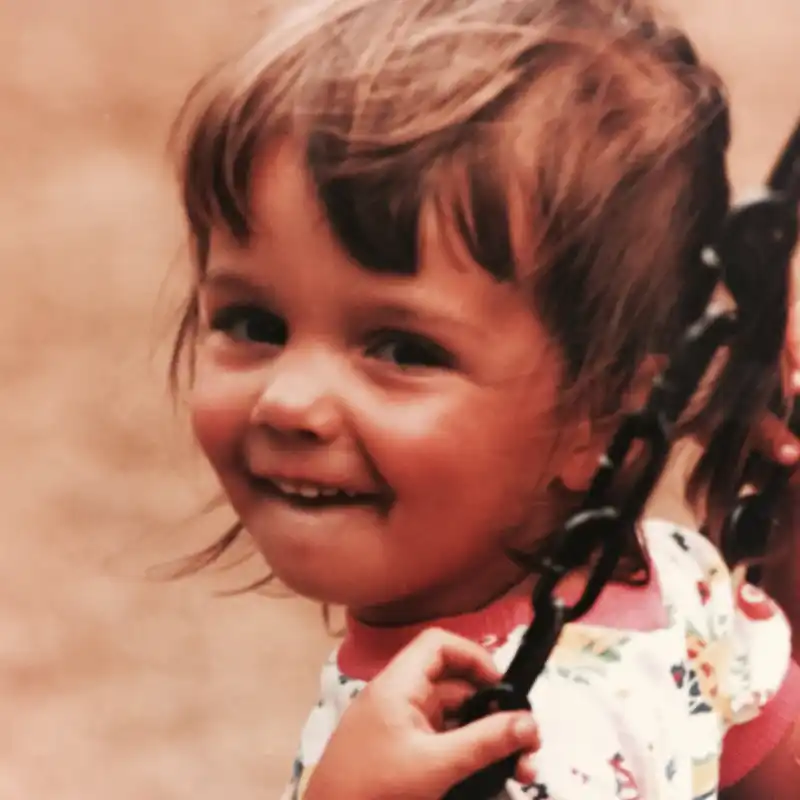
Time seemed to slow to a crawl as the unmistakable presence of my seven-year-old self rose to the surface carrying a profound heaviness that had long gone unspoken. Then the tears came, and a dam broke open. My sobs felt like a language my body had been holding onto for decades without words. I was releasing something enormous, an emotional weight that had silently shaped the edges of my life for 38 years. Finally, a sadness that had never been allowed expression was being given a voice.
This is when I knew my mantra had touched something real. A deeper layer was asking to be seen.
The Memory That Surfaced
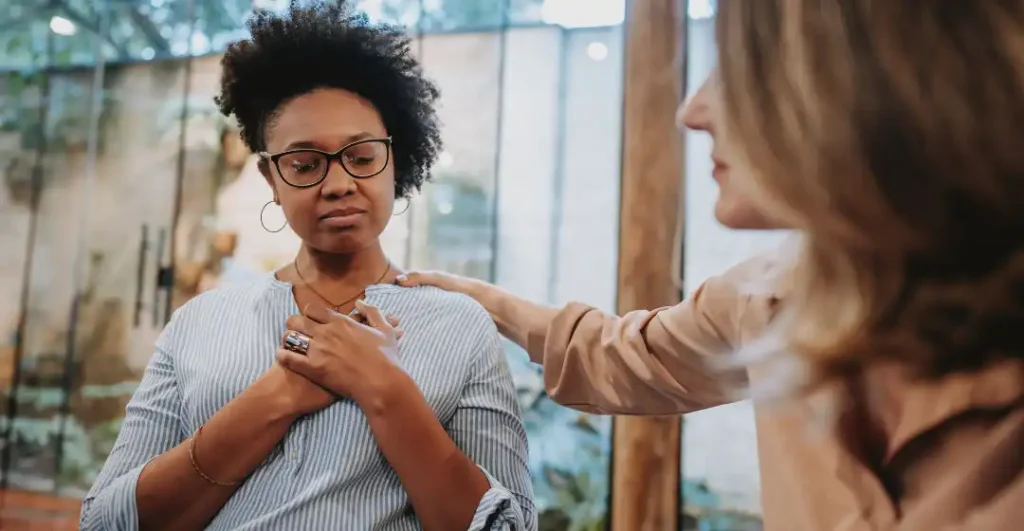
In that moment of emotional flooding, a memory rose up:
My mom, furious, in my face, yelling, “You don’t DESERVE that because you don’t take care of things.” I don’t remember what the thing was, I was about 7 years old, I just remember the rage, her closeness to my face, and how the energy behind it did not feel like connection, or even correction. It felt like hostility with a kind of shame I was expected to feel in order to be worthy again. As if my sense of belonging depended on how fully I could absorb the belief that I was undeserving.
There were many times throughout my childhood when similar language and energy were directed at me: loud, intense, and deeply disorienting, often from multiple adults within my family. In this particular memory, it was my sweet mother who, in that moment, became the one to encode the message into my system. She was the vessel, not the origin.
In other words, my mother was the messenger of a pattern, not the one who invented it. She carried generational weight, scripts passed down from her own wounding, her own unmet needs, her own upbringing. What came through her wasn’t born in her. It was inherited.
Through my healing process, I now know that my mother was under enormous pressure in those years, carrying emotional burdens and responsibilities she hadn’t been taught how to process. She was a woman navigating her own survival. And while I can hold compassion for that now, as a child, I had no framework to make sense of it. I couldn’t see her pain, I could only feel its impact. And that impact was compounded, again and again, by every similar experience that echoed the same message: you’re not safe to be fully yourself here.
Another memory came back vividly. It was Easter Sunday, around the same age. I had dressed up, my hair was lookin cute, I put on colored chap-stick. I felt pretty, alive and self expressed. Then something happened, I got in trouble for something, and I instantly retreated to my room where I stripped off the makeup, tore down the outfit, messed up my hair, and put on play clothes.
I did that a lot. Even into adulthood. If I got into an argument with someone I loved, especially a partner, I’d instinctively erase any trace of what made me feel good in myself. As if joy, beauty, self-expression, or radiance had to be punished the moment conflict entered. As if feeling good was a privilege I no longer deserved, in an instant.
The Contract I Made
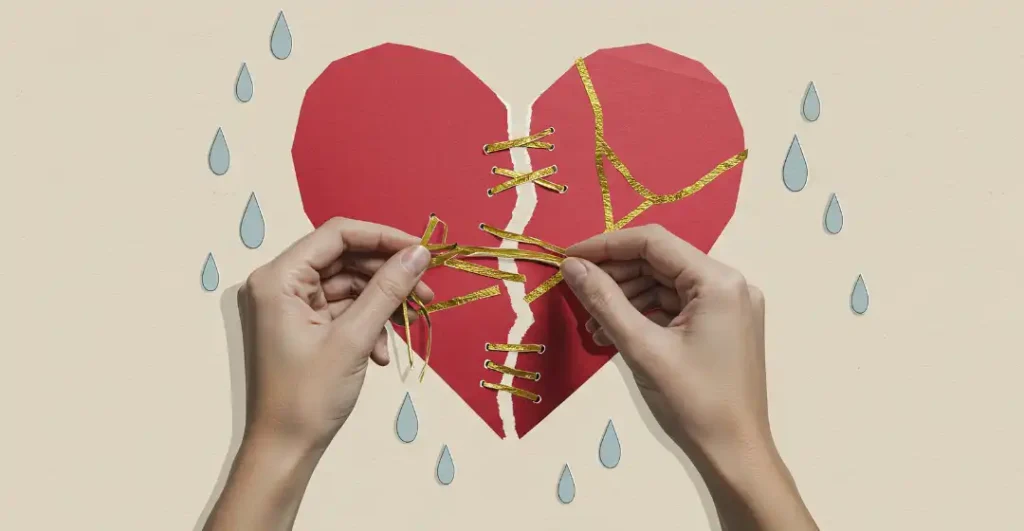
This is the contract I signed with myself, under the pressure of that particular childhood pain:
“I am not good enough as I am. I have to be better in order to deserve good things.”
And the most confusing part was this: “Better” was never clearly defined.
Was it how I stood? How I walked? How I talked to people? Was it about never showing emotion, never messing up, always being polished and in control?
There was no clear standard, just the ever-present sense that who I was, as I was, wasn’t quite right. So I began scanning every part of myself, wondering: What’s wrong with me? Will this version of me finally be enough?
That kind of uncertainty doesn’t just create pressure. It creates perpetual self-surveillance, a loop of quiet self-correction, always chasing an invisible metric outside of myself.
I internalized the idea that unless I proved my worth through perfection or performance, I didn’t deserve good things. And even more deeply, that if I did receive something good, I wouldn’t be able to keep it. Because sooner or later, I’d mess it up by becoming “irresponsible” and lose it.
It felt like good things were dangerous, and that they always came with strings: shame, punishment, or the looming fear of not enoughness.
I learned to dull myself; visually, energetically, emotionally. I learned how to shrink to create some sense of belonging; in my home, at school, in friendships, in my first marriage. I wore what helped me blend in. I behaved in ways that kept me from standing out. My nervous system equated visibility with vulnerability, so invisibility became my safest state.
I remember being 19 and going to the doctor because at 5’5″, I weighed just 90 pounds and couldn’t figure out why I wasn’t gaining weight. That’s when I learned that anorexia doesn’t always have to be a conscious choice. My body had simply stopped asking for food, because my nervous system had adapted to help me disappear.
There were times when a rare few could see my light under it all; my Godmother being one of them. She would always encourage me to “just let go” and “be youself”, but even that made me extremely uneasy. The idea of being fully seen, fully expressed, stirred something unfamiliar in me that felt very, very uncomfortable.
The Deeper Root
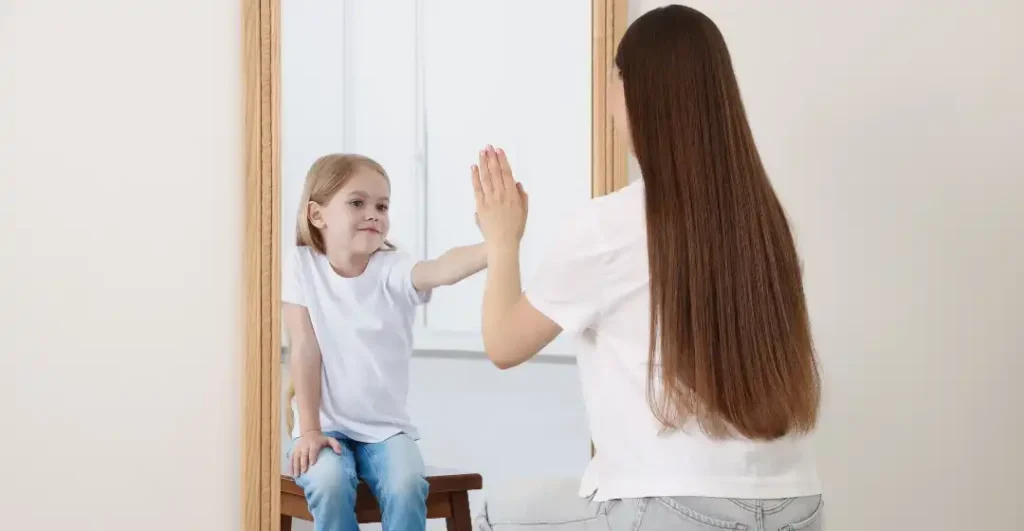
When I sat with the little girl that day in April, I made room for her to speak, and what she wanted wasn’t complicated. She didn’t want more. She simply wanted to be; to dance, to feel joyful and to self-express her brilliance.
She didn’t need correction at seven years old, she needed protection. She needed patience. And if there was something she didn’t yet know, what she needed was to be taught with gentleness, not shamed for her innocence. What she needed was presence: someone willing to slow down, to guide her with love, and to affirm her worth as she learned, not diminish it.
Part of the integration work lays heavy on internal conversions, so when I asked her what she would have said if she had felt safe enough to speak in that moment with her mother, her words were clear:
“There is no reason to yell, and certainly not that close to me. If you think I could do better, then teach me how. Don’t shame me into meeting an expectation I know nothing about. I’m the child, you’re the parent. Teach me what I need to know because you want to see me thrive in life.”
Because here’s what I’ve come to believe:
Our parents’ pain doesn’t excuse their behavior. But, it helps us understand its origins, and from that place, we can release ourselves from continuing the pattern.
At that moment, I stopped identifying with the little girl who had to earn her place by shrinking. And I stepped into the woman who celebrates her radiance, and protects her joy.

The Real Me: Unshrunk
If you’ve ever had to shrink to be loved, or if you learned to dim your joy, beauty, or brilliance just to keep peace, I feel you.
And listen, we can choose something new. We can return to the truth by asking what our younger selves what they need and deeply desire, and to offer them something they’ve always wanted. To be seen, heard and validated. For me, the letter I wrote to her included this message:
“You are absolutely perfect, just the way you are. You are precious and a treasure. Your radiance allows others to step into theirs. You deserve all the wonderful and good things in life.”
During this healing session I moved through some somatic work to create space for a new identity to land, one that knows I am worthy simply because I exist.
This is the truth I’m vibrating at now. My “receiving channels” have become more open with each layer of healing I move through; not just in my mind, but in my body.
“I’m allowed to have it this good.”
And so are you.
An Invitation
If something stirred in you as you read this; if an old memory, an emotion, or even a silent agreement surfaced, I invite you to pause and honor it.
You don’t have to rush to fix it. You don’t have to solve it all today.
But you can witness it. You can begin to tend to it. You can start speaking the truth that part of you never got to say.
What contract did you sign without realizing it? What part of you has been waiting for permission to exhale?
Because your light was never the problem. Your wholeness was never too much.
And now, you get to decide what’s true for you.